 Marina DiPonio
Ambient · Underwater
Marina DiPonio
 ★ Summer 2025 · Gator User Design
Platform evaluation for UF student orgs · Gator User Design intern team
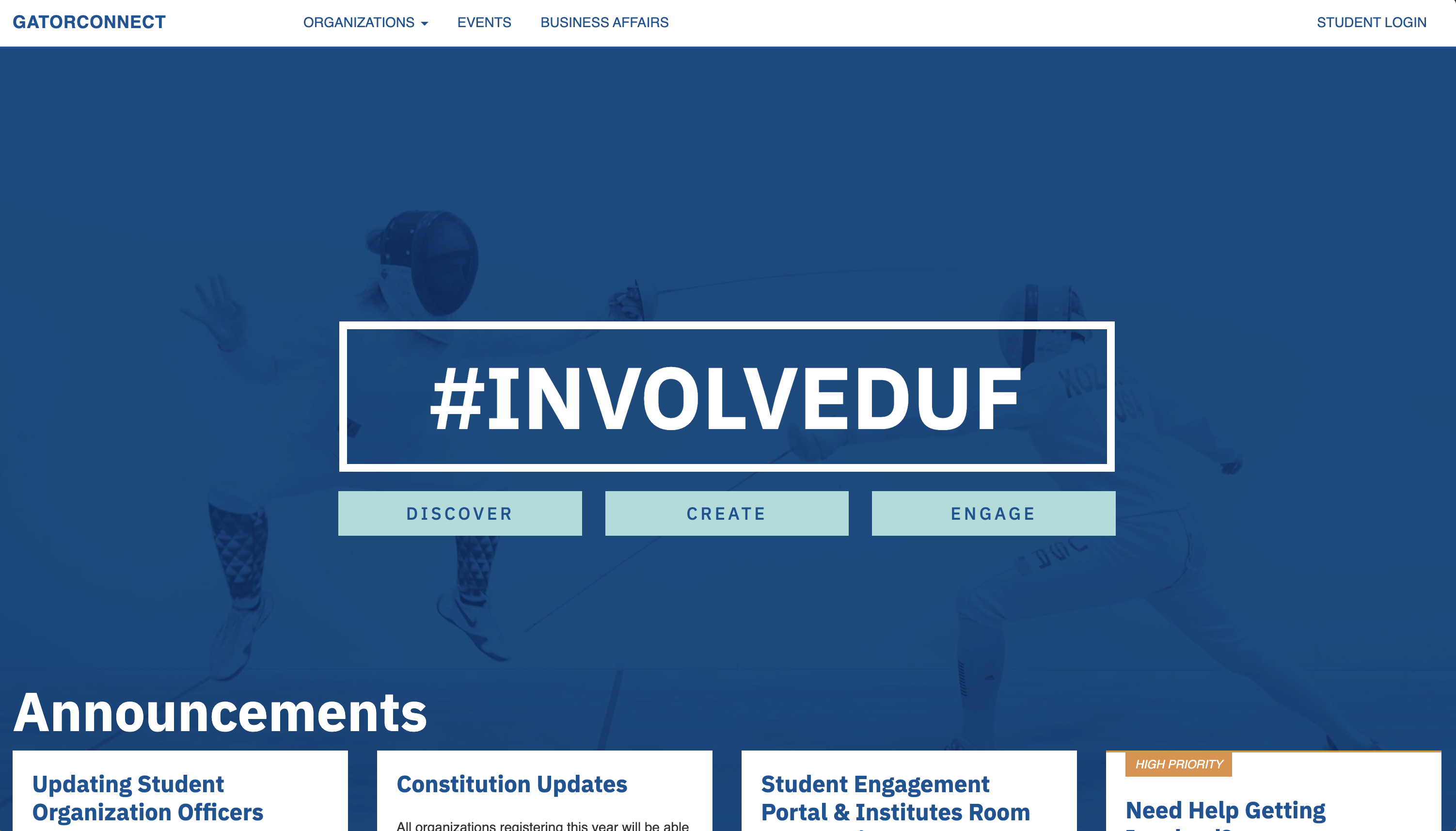
UF was evaluating whether to transition from Gator Connect to Anthology Engage for student organization management. As part of the Gator User Design intern team, I helped conduct research to inform this business decision—analyzing competitor platforms, interviewing students at peer institutions, and identifying what would actually make students engage with these tools.
The core question wasn't just "which platform is better?"—it was "why aren't students using these platforms at all?" Our research revealed that the problem wasn't unique to UF. Across universities, students overwhelmingly preferred Instagram and social media for discovering and engaging with clubs, regardless of what official platform their school offered.
We used two complementary methods: competitive analysis and user interviews. For the competitive analysis, we examined Anthology Engage implementations at 11 peer institutions including FSU, UCF, UGA, UMich, and UNC. We documented core features, filtering systems, visual design choices, and unique integrations each school had implemented.
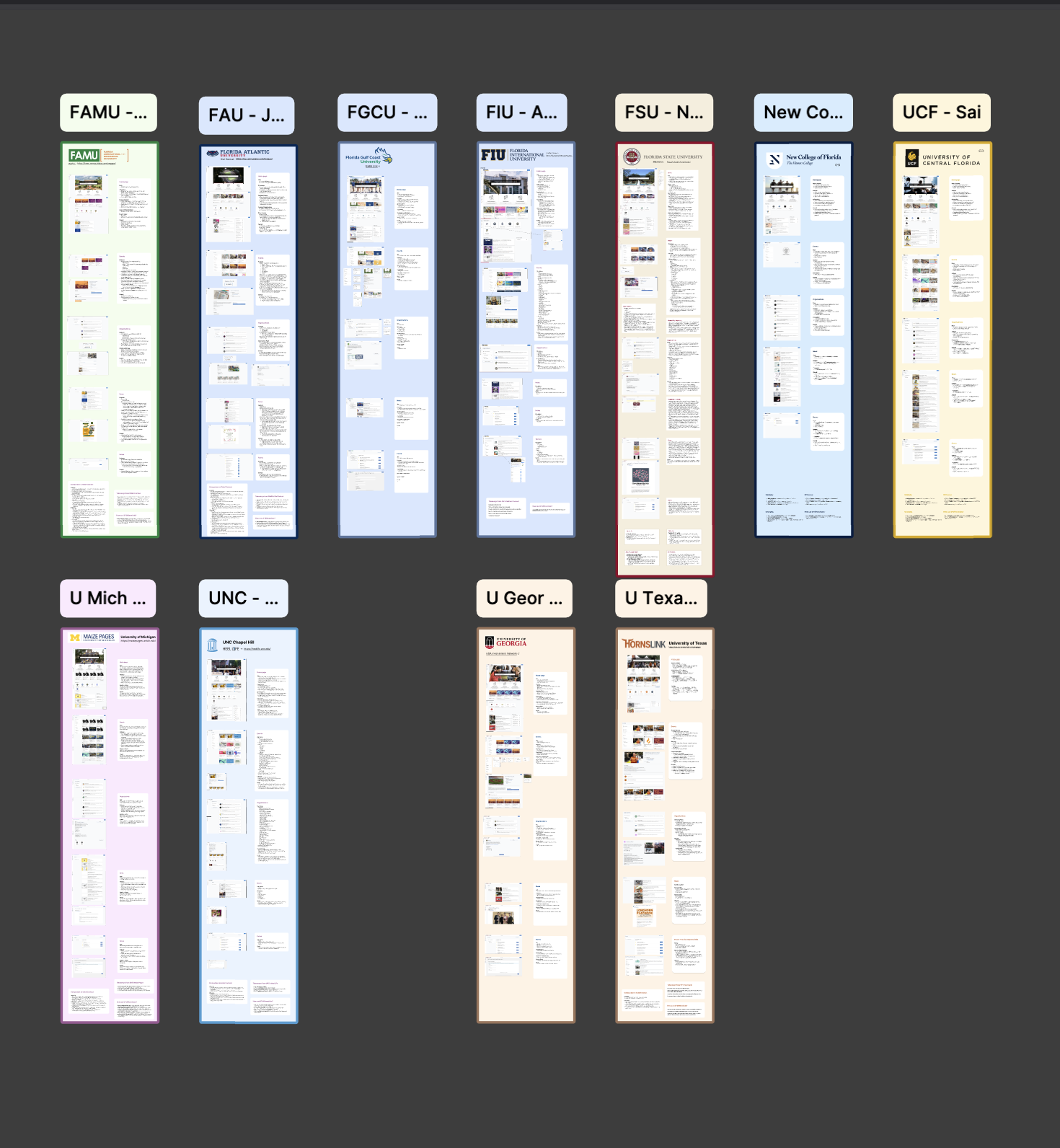
For user interviews, we conducted 30-45 minute semi-structured conversations with 11 students ranging from casual club members to student organization leaders. Participants represented different years, majors, and involvement levels—giving us a comprehensive view of how students actually discover, join, and engage with campus organizations.
The interviews focused on discovery patterns, platform usage, pain points, and desired features. We asked students to walk us through their actual process for finding clubs, not their idealized one.
The fundamental problem: neither Gator Connect nor Anthology Engage gave clubs a compelling reason to stay active on the platform. The tools weren't personalizable enough for organization leaders to showcase their club's identity, and they weren't engaging enough for students browsing to feel like they were getting accurate, up-to-date information.
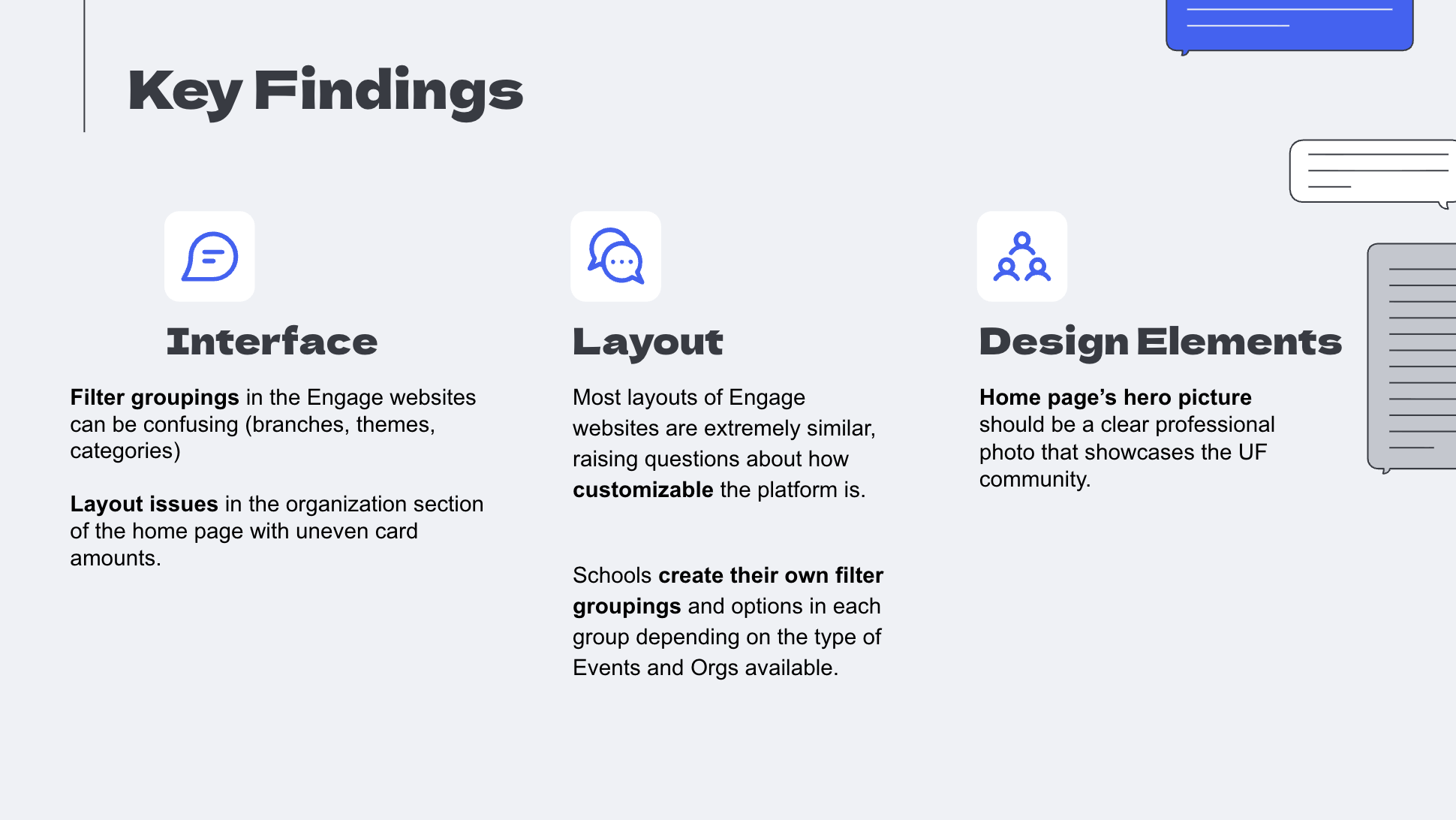
Students told us they used official platforms for initial discovery, then immediately switched to Instagram, GroupMe, or Slack for real engagement. The platforms functioned as directories, not communities. Event information was frequently outdated. Club pages felt abandoned. Students had no way to tell if an organization was actually active.
"I would change the look of the website, it doesn't look appealing and the way the clubs are displayed doesn't make them look inviting at all." — Student from FSU, Marketing & Global Club Management
Our recommendations focused on bridging the gap between "directory" and "hub." First, require organizations to update their pages each semester to remain listed as active—this creates accountability and ensures students see current information. Second, improve filtering with research-backed categories including interest areas and engagement perks like free food or merch.
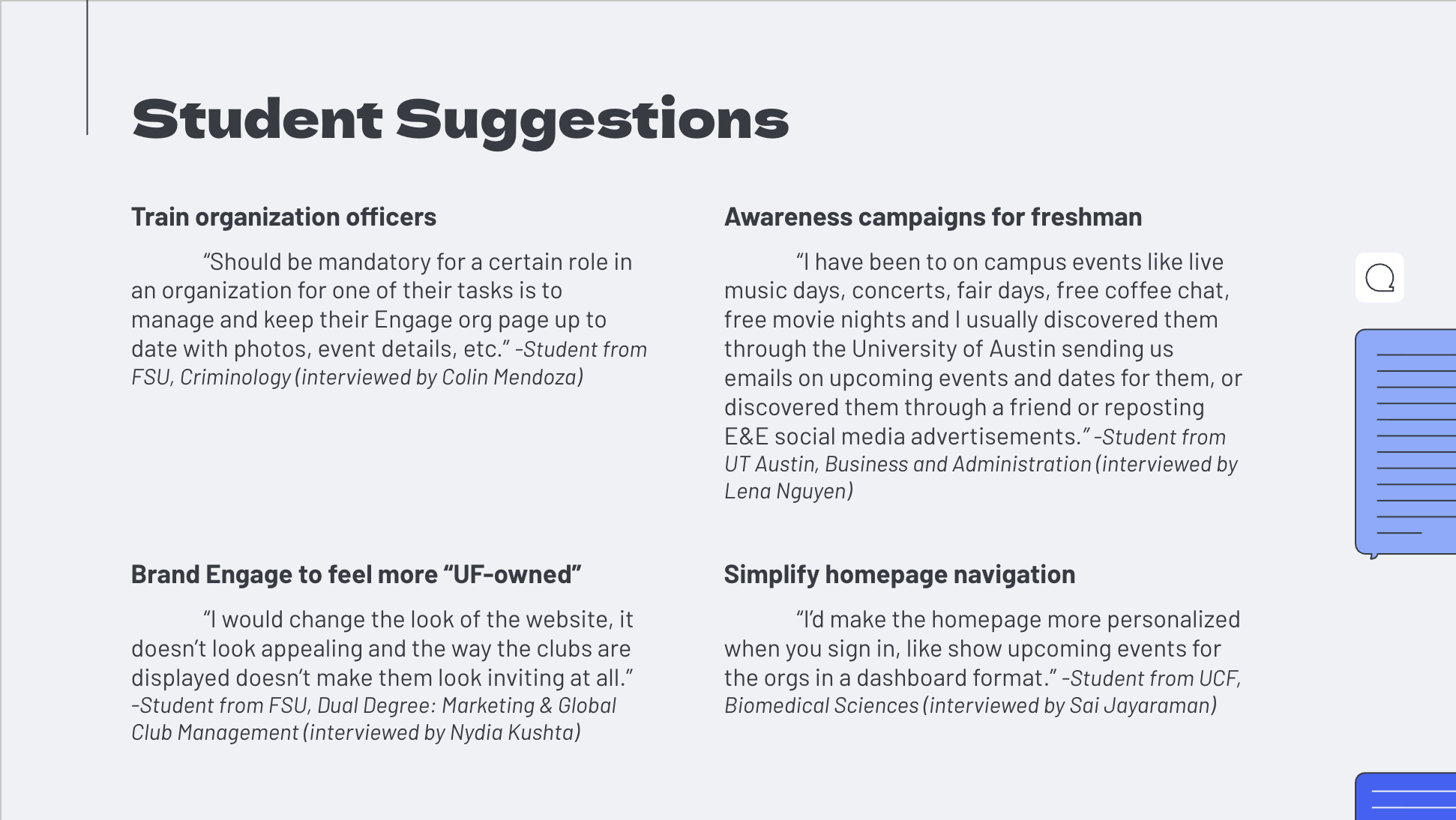
For event discovery, we recommended highlighting upcoming events on the homepage and allowing organizations to tag events with perks that draw students in. The platform should feel less overwhelming by using high-quality visuals that showcase authentic student life and implementing cleaner filter groupings without excessive scrolling.
We also suggested integrating existing UF resources—partnering with The Independent Florida Alligator for campus news and connecting with Gators for Good for service opportunities. The goal: position Engage as the central hub for student life, not just another website students have to check.
Accessibility