 Marina DiPonio
Ambient · Underwater
Marina DiPonio
 ★ 2-Week Sprint · 6-Person Team
A chaotic first-person action game · 2-Week Sprint · Producer & UX
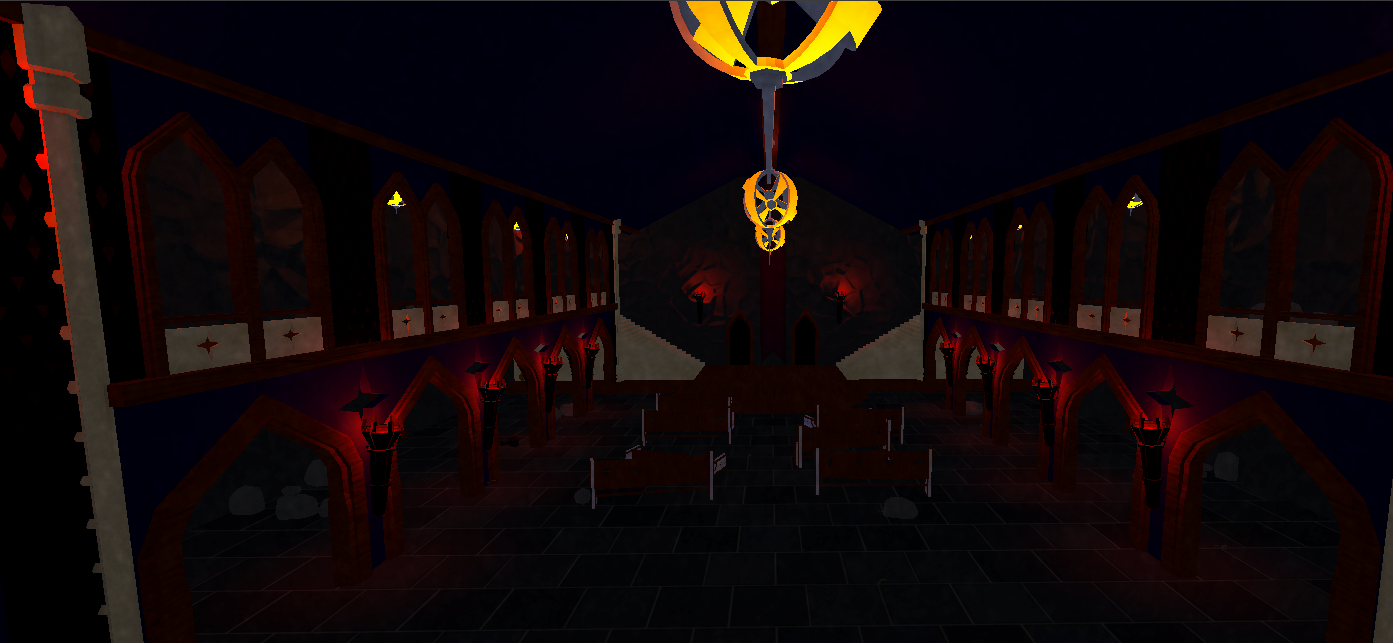
Insane Wizard Goes Crazy Everywhere is a first-person action game where players wield magical spells to survive waves of goblins and trolls in a cathedral dungeon. Built in just two weeks, the project challenged our team of six to deliver a polished, playable experience with tight scope management and rapid iteration.
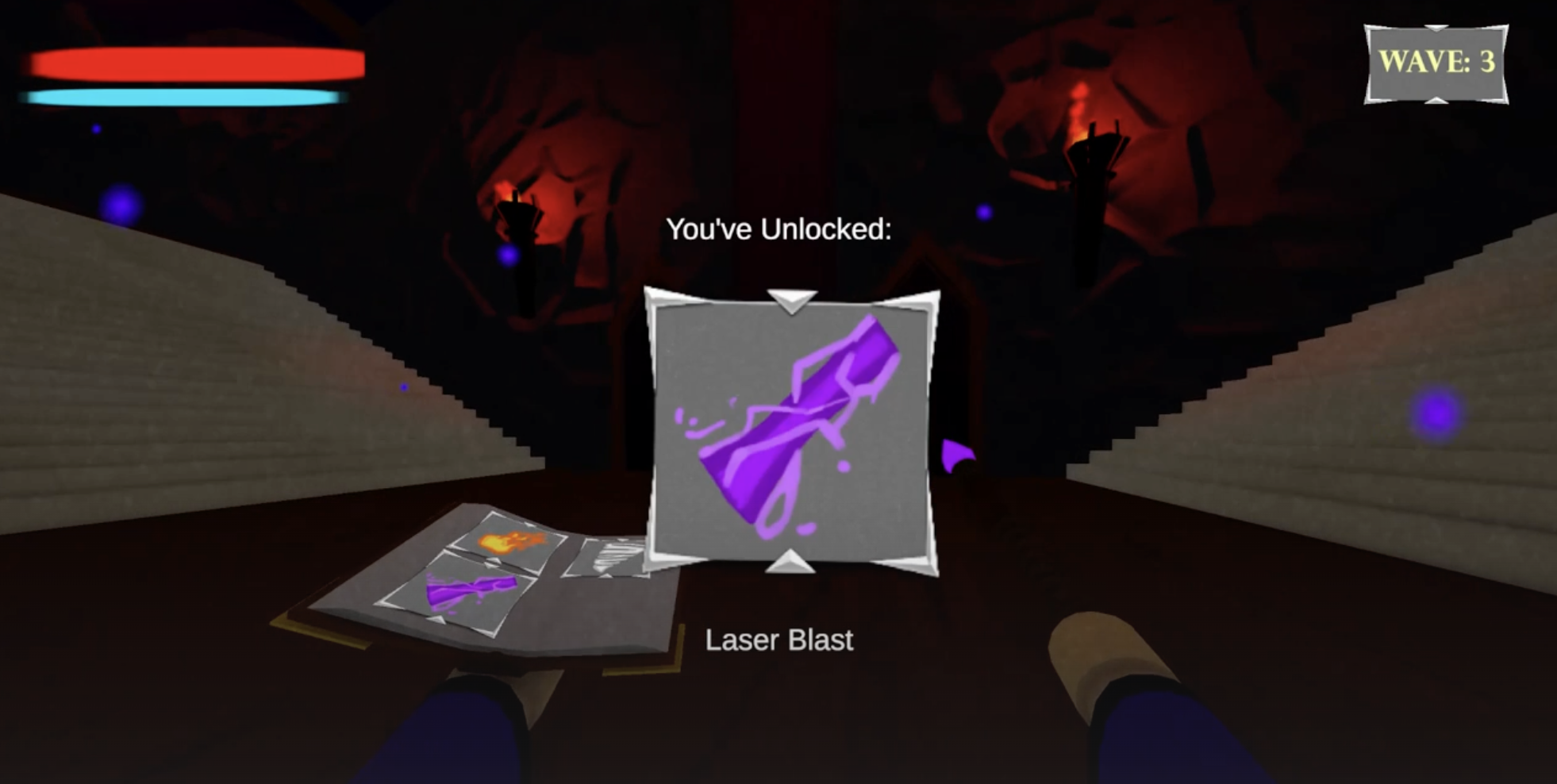
The game features spell-based combat with a unique dual-hand system—Magic Missile in the main hand for mana regeneration, and powerful spells like Fireball and Laser Beam in the off-hand. Our design pillars focused on fantasy elements, satisfying magic mechanics, and delivering the smallest viable demo that showcased each team member's skills.
The final product delivers five waves of increasingly challenging enemies in a stylized cathedral environment. Players face goblins as medium-tier threats and trolls as tanky heavy enemies, with wave composition escalating from simple goblin encounters to mixed hordes that test all available spells.
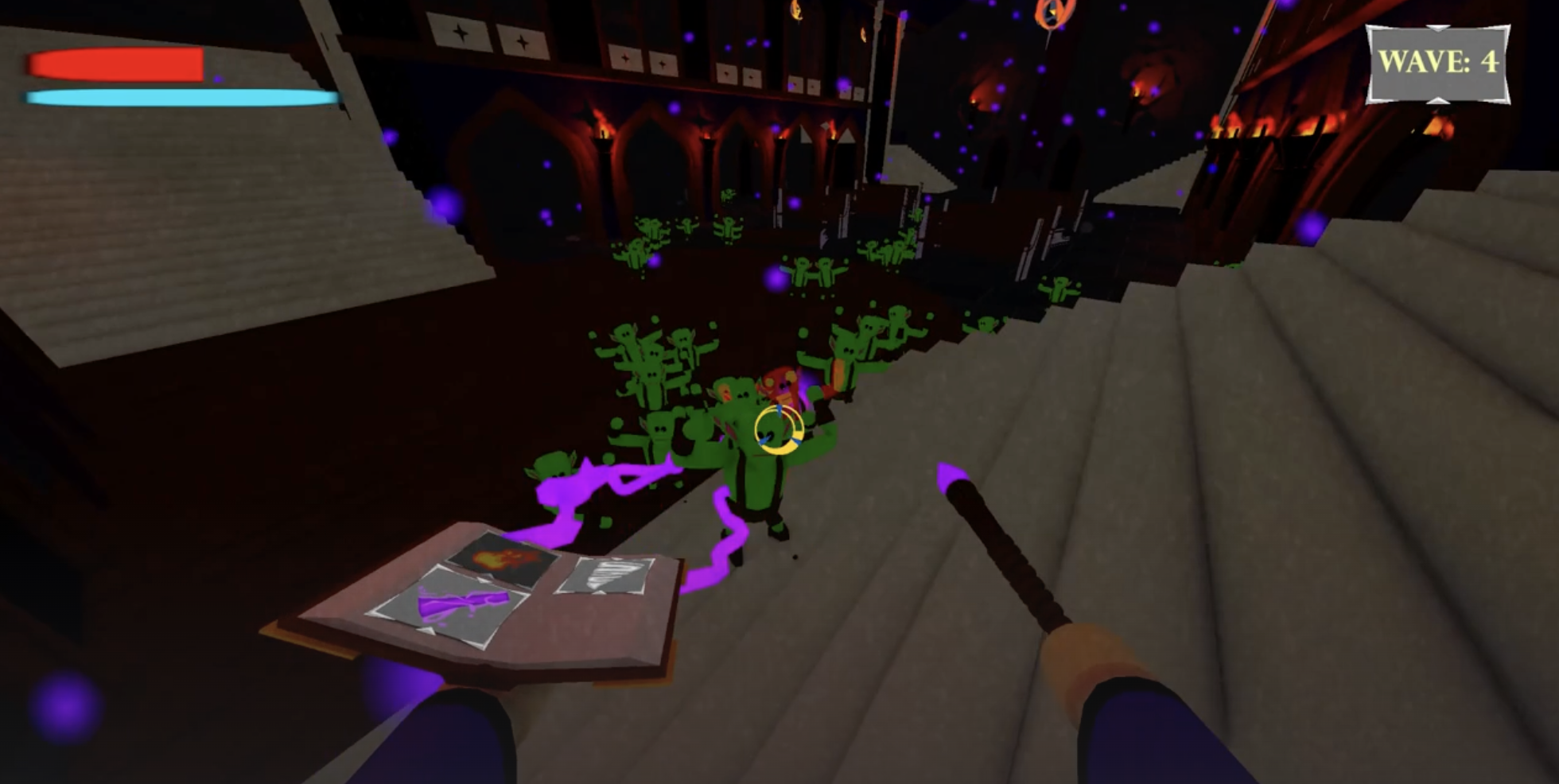
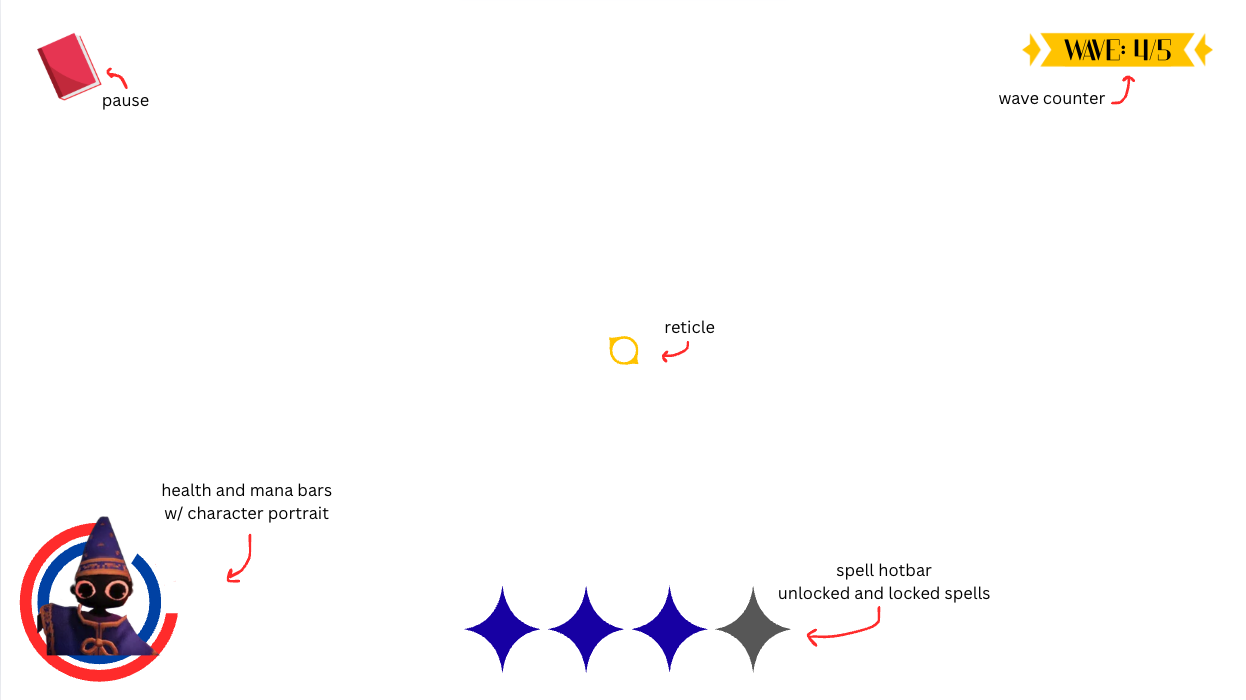
The UI system communicates critical game state through a health bar, mana meter, spell hotbar, and wave indicator. I designed the HUD to balance the game's chaotic energy with clear readability—players needed to track their resources at a glance while focused on fast-paced combat. The mana circle design went through several iterations based on team feedback to find the right visual weight.
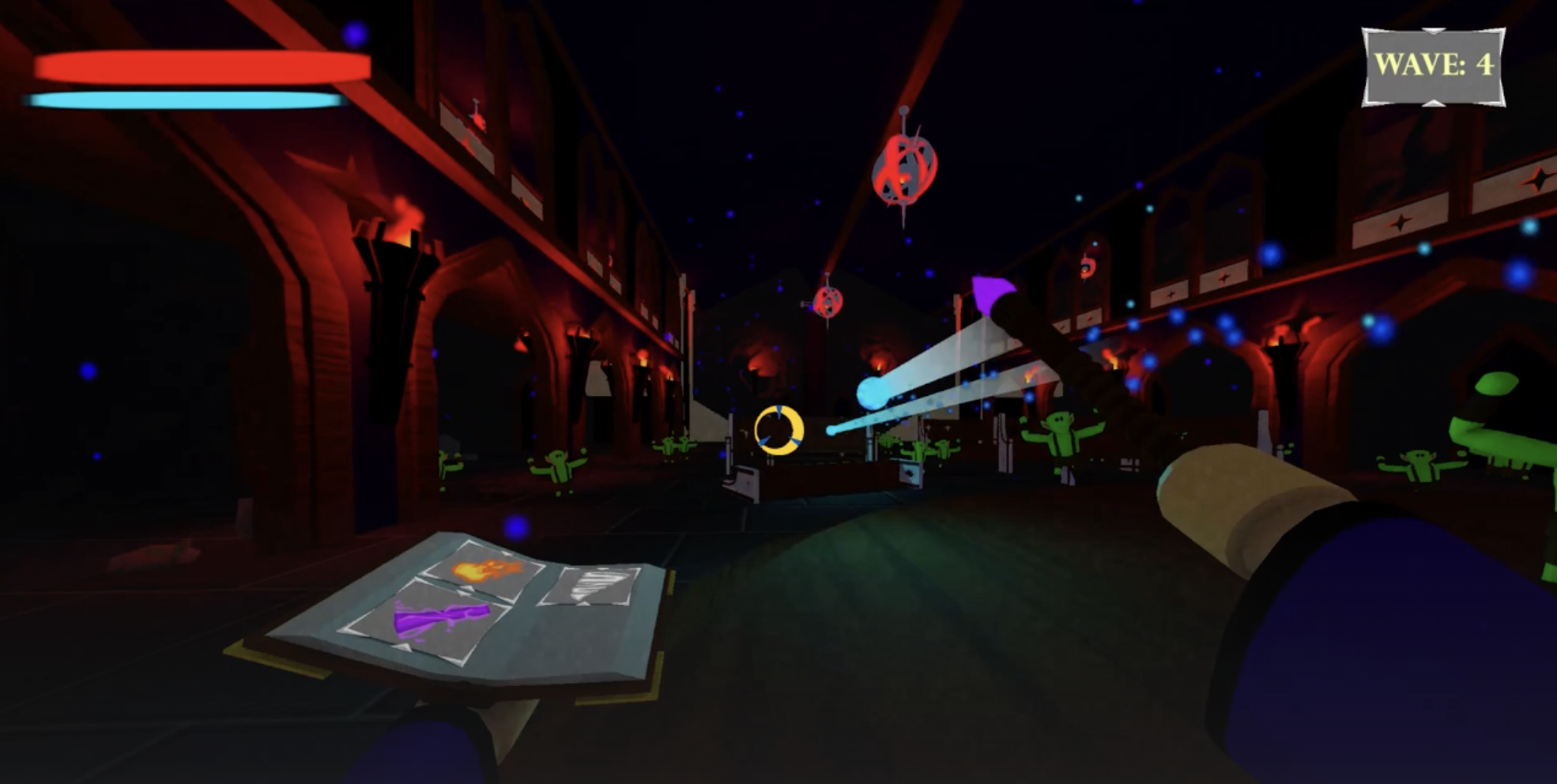
Our cartoonish, darkly whimsical art direction drew inspiration from games like YAP YAP and Hades, creating a tone that was goofy and surreal while still delivering satisfying combat feedback. The low-poly cathedral environment with stained glass windows and torchlight gave the dungeon atmosphere without overscoping our artists.
Development kicked off with intensive brainstorming sessions where we defined our core concept: "a wacky little wizard fights waves of goofy goblins and trolls." From there, I helped the team scope down from ambitious rogue-lite features to a focused demo that would showcase one room, two enemy types, and three spells.
I created a comprehensive task list in Trello, breaking work into programming, modeling, UI, and audio tracks. Each teammate estimated their weekly capacity (ranging from 2-8 hours), and I aligned deliverables accordingly. Our meeting cadence—Sunday, Monday, and Friday sessions—kept everyone synchronized without burning out.
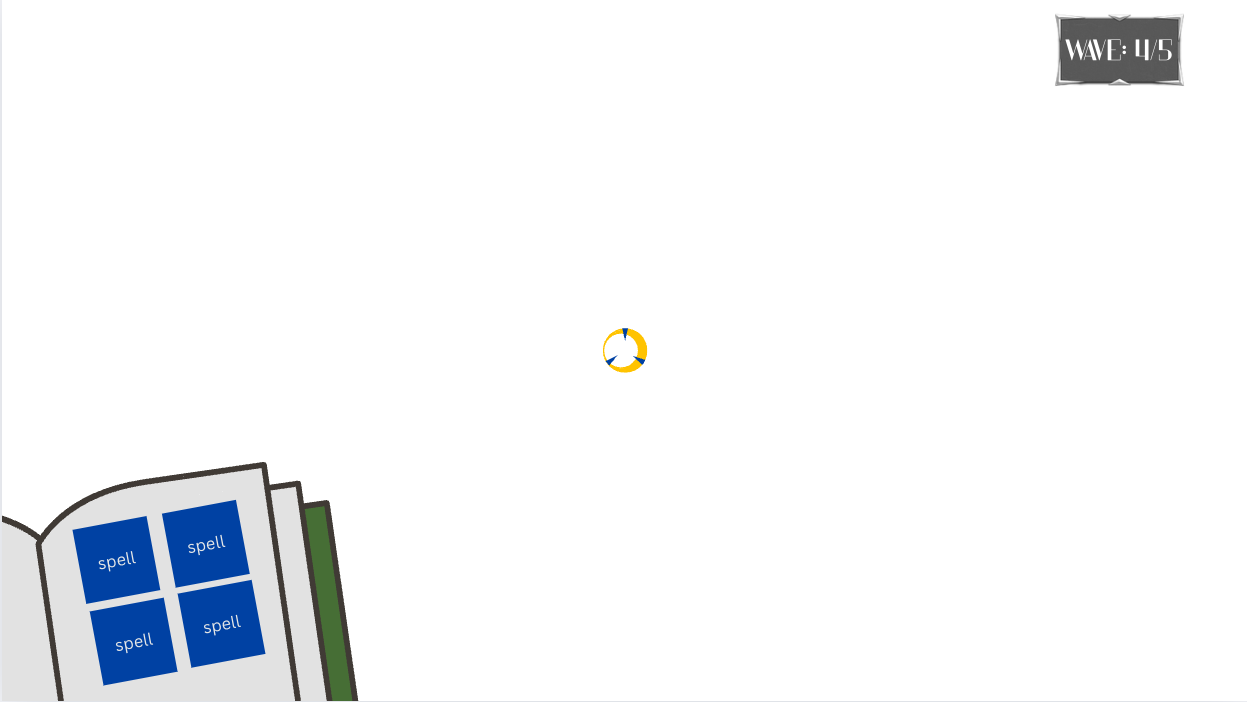
For the UI/UX work, I started with competitive analysis of games like Rune Fjell and Terraria to understand spell hotbar conventions. The crosshair research focused on communicating accuracy and spell state clearly. I built HUD mockups in Canva, presented them to the team, and iterated based on developer feedback about implementation feasibility and player testing insights.
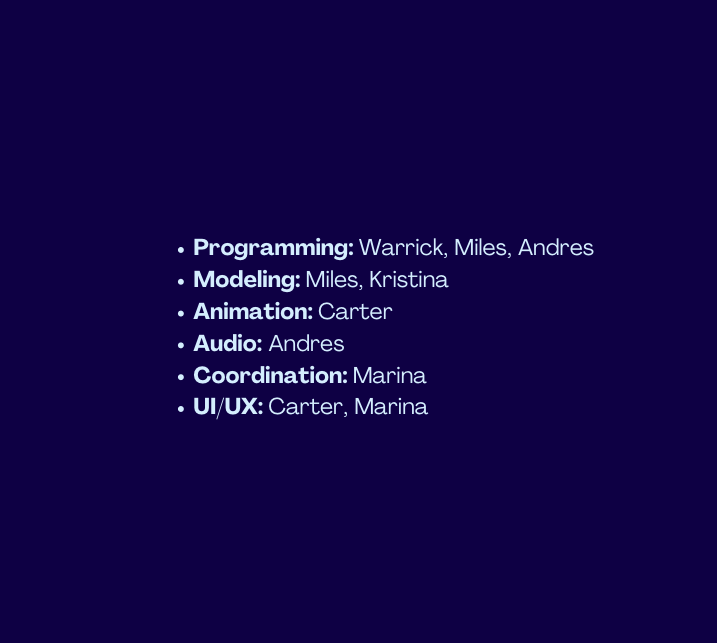
This project reinforced that appropriate scope is everything. Our team succeeded because everyone understood their capacity and committed to realistic deliverables. When challenges arose, teammates collaborated to solve problems rather than pushing through alone—a dynamic I worked hard to foster through transparent communication and flexible task reassignment.
I gained confidence in creating UI assets. Early in the project, I hesitated to commit to visual designs, but iterating through multiple HUD versions with team feedback showed me that rough concepts spark better discussions than waiting for perfect mockups. The collaborative workshopping process produced stronger results than I could have achieved designing in isolation.
Looking back, more emphasis on post-production and marketing would have added extra polish to our game. We delivered a solid playable experience, but dedicated time for trailer creation, itch.io page optimization, and social media presence could have given our work more visibility. It's a lesson I'll carry into future projects—budgeting time for the "sparkle" that helps games stand out.
Accessibility