 Marina DiPonio
Ambient · Underwater
Marina DiPonio
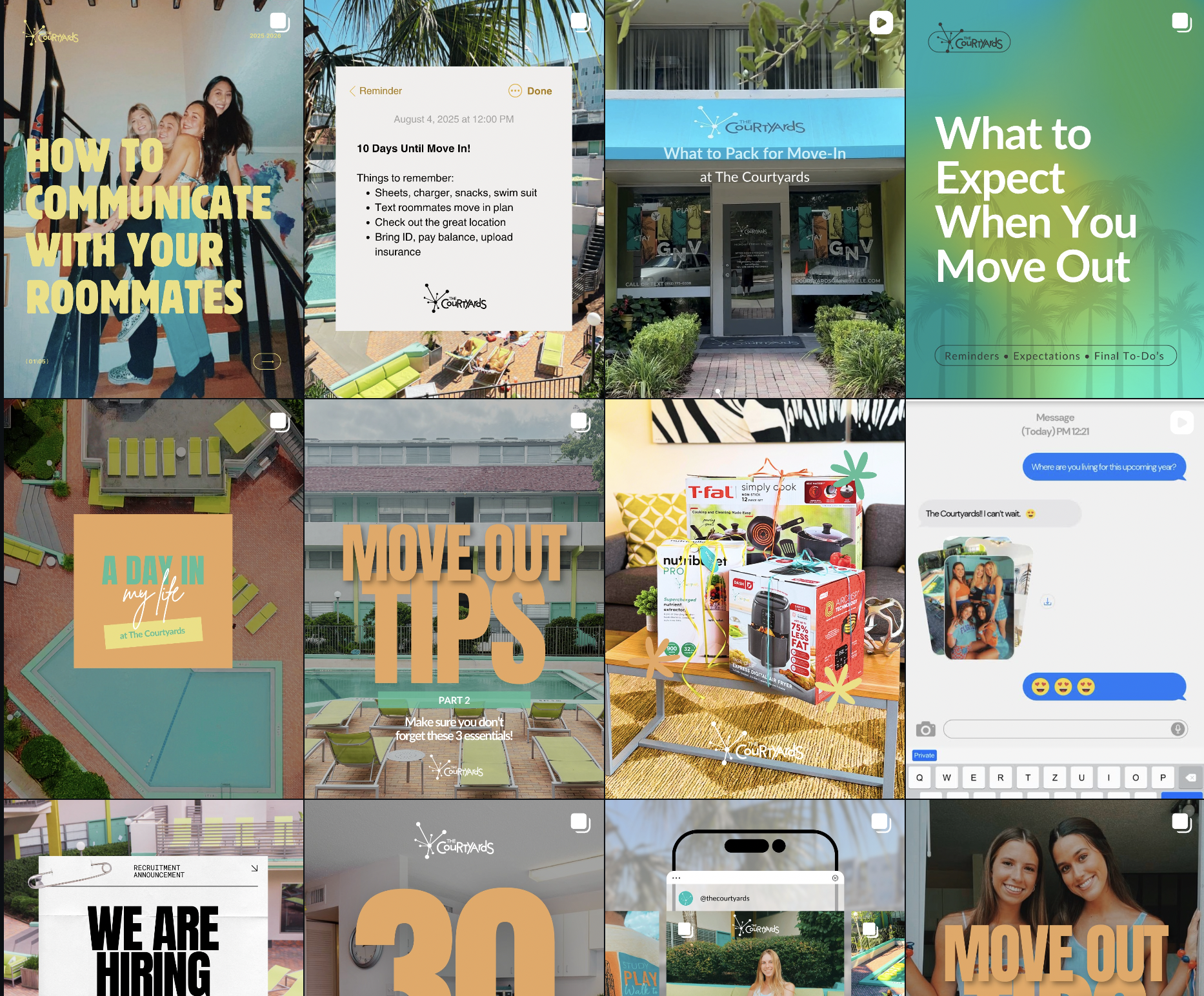 ★ 6,332 Monthly Views · 60%+ Engagement
The Courtyards at UF · 6-Month Engagement · Content & CRM
The Courtyards is a student-focused apartment complex half a block from UF's campus, managed by Contemporary Management Concepts. My role combined social media marketing with hands-on CRM management—creating content that drove engagement while personally tracking and nurturing leads through the leasing pipeline.
The challenge was reaching students where they actually spend time (social media) while maintaining the personal touch that converts interest into signed leases. I developed a strategy that balanced resident life content—building community and FOMO—with practical deadline reminders and activity announcements.
I approached posting time optimization like a research project. Generic "best times to post" advice wasn't cutting it, so I dug deeper—researching optimal timing by region, time zone, and demographic. The more specific the data, the better the results. I tested different combinations and tracked what actually moved the needle for our specific audience of UF-adjacent students.
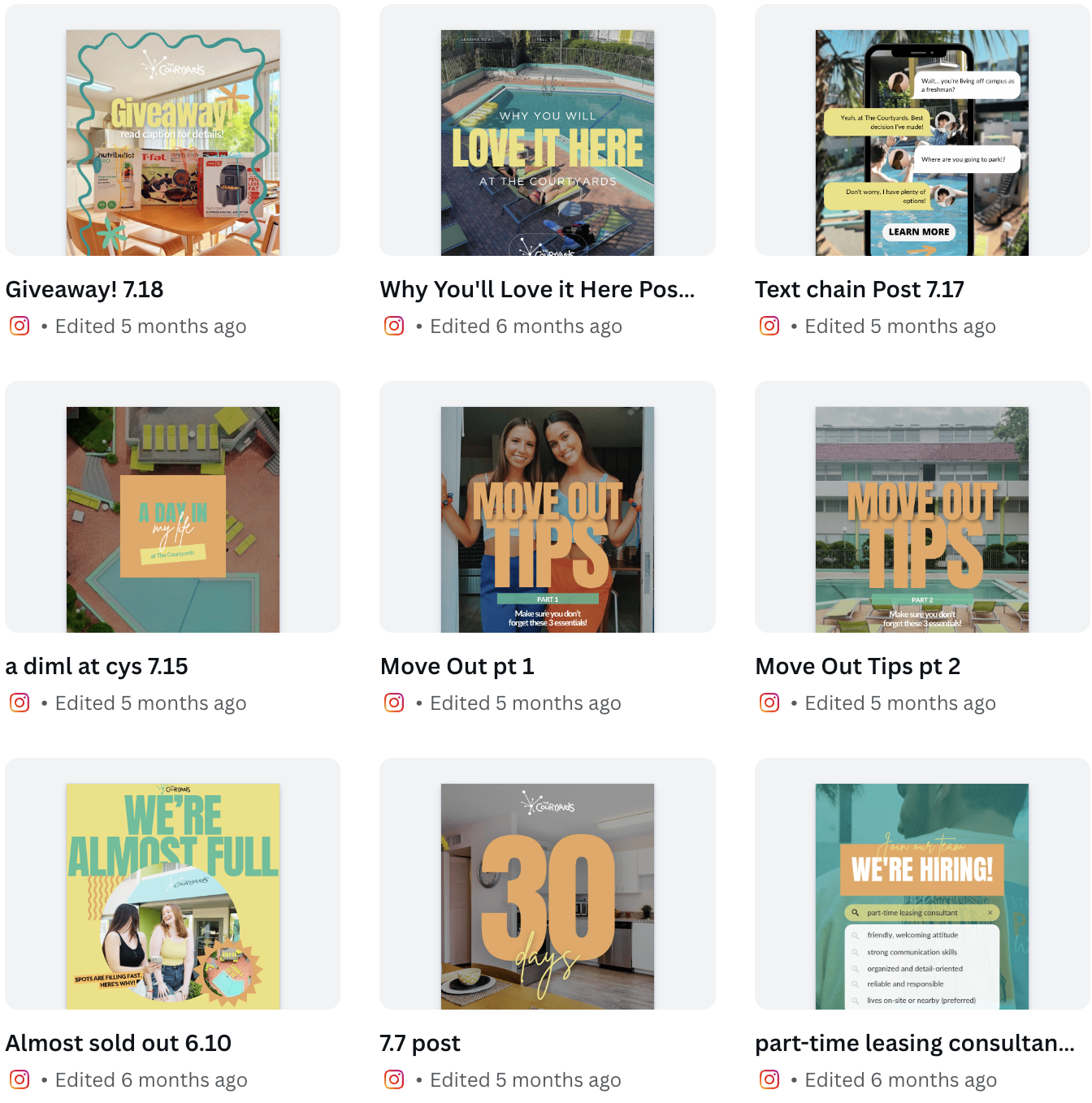
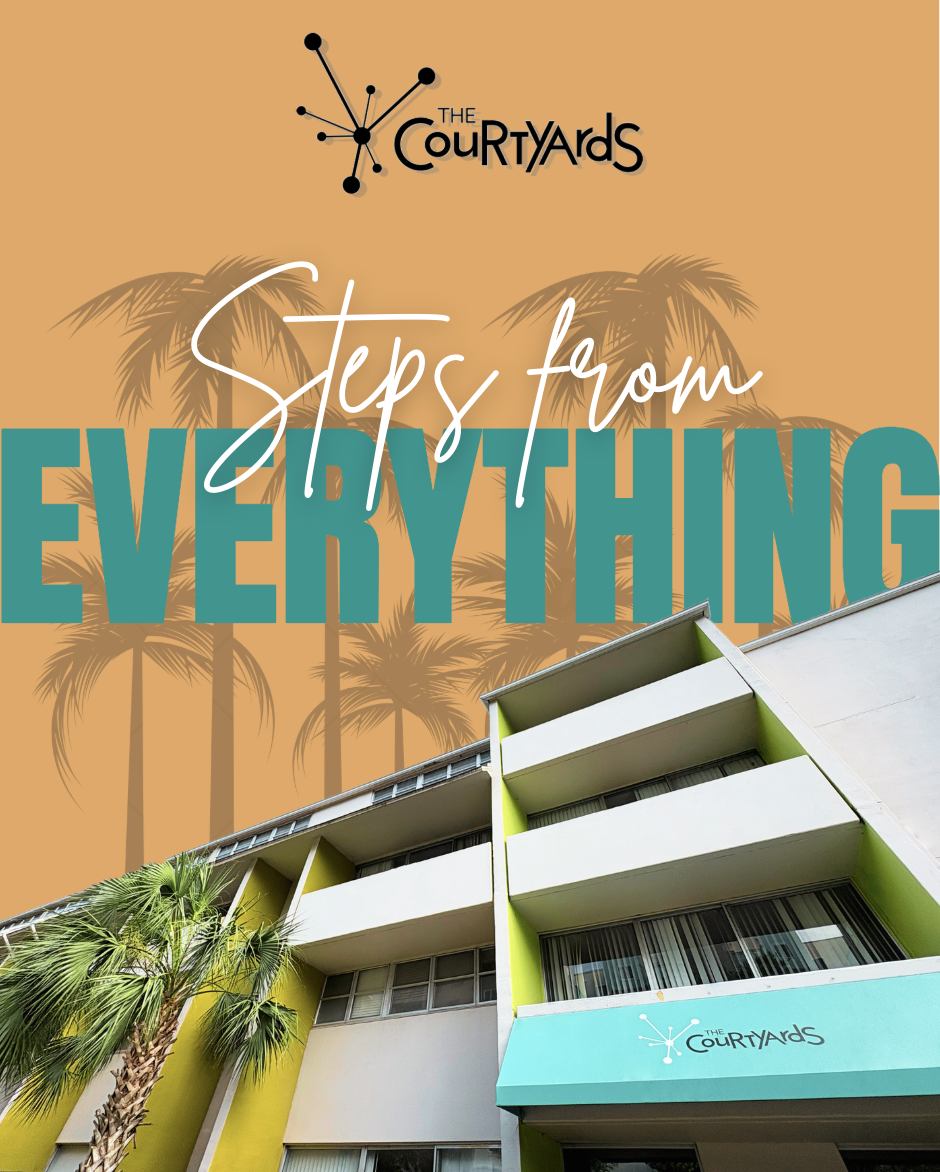
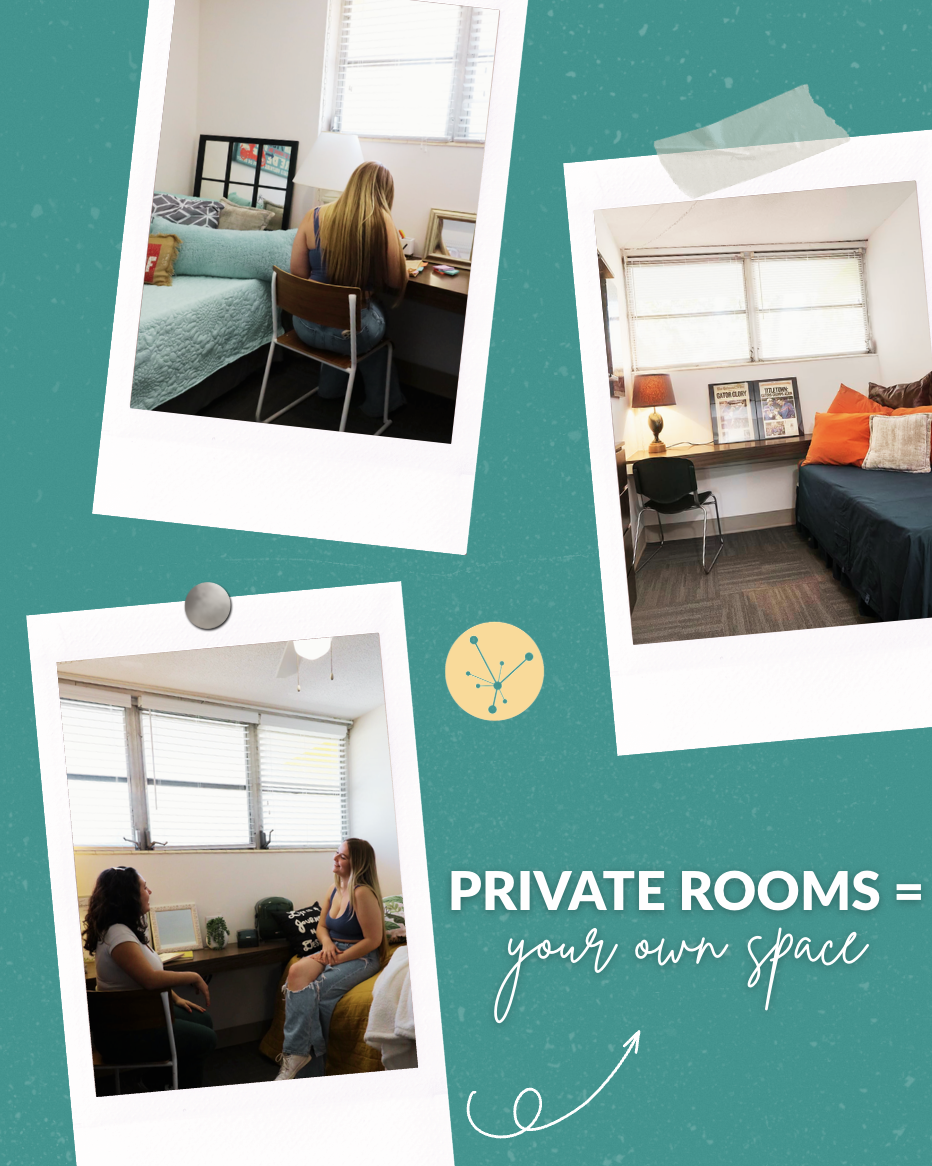
Content fell into two buckets: resident life (community events, apartment features, lifestyle content) and informational (deadline reminders, leasing updates, activity announcements). The resident life content built aspiration—showing prospective tenants what living at The Courtyards actually looked like. The informational content drove action at key decision points in the leasing cycle.
Beyond social media, I managed the CRM side of the operation. Each day I worked, I reviewed incoming messages and cross-referenced them with notes from property tours. This wasn't automated follow-up—it was personal outreach informed by actual conversations.
I contacted leads through the right channel at the right time: emails for detailed information, texts for quick reminders, calls for prospects who needed that extra push. The key was treating each lead as a person with specific concerns, not just a name in a database. Tour notes gave me context—what they were excited about, what hesitations they had—so my follow-ups could address real questions rather than sending generic marketing copy.
The numbers validated the strategy: 6,332 views in a single month and over 60% follower interaction rate. But the real win was in the process—building a repeatable system that connected social media engagement to actual leasing outcomes.
This role taught me that marketing and user research share the same core skill: understanding what people actually care about and meeting them there. The posting time research was fundamentally user research. The personalized CRM follow-ups were empathy in action. The content strategy was hypothesis testing. These aren't separate disciplines—they're all about paying attention to what works and doing more of it.
Accessibility