 Marina DiPonio
Ambient · Underwater
Marina DiPonio
 ★ Functional MVP · Solo Build
AI-powered photo recognition · Solo MVP · UX & AI integration
Tracking calories and macros is essential for many people—athletes optimizing performance, individuals managing health conditions, anyone trying to understand what they're actually eating. But manual food logging is tedious enough that most people abandon it within weeks. The friction isn't motivation; it's the process itself.
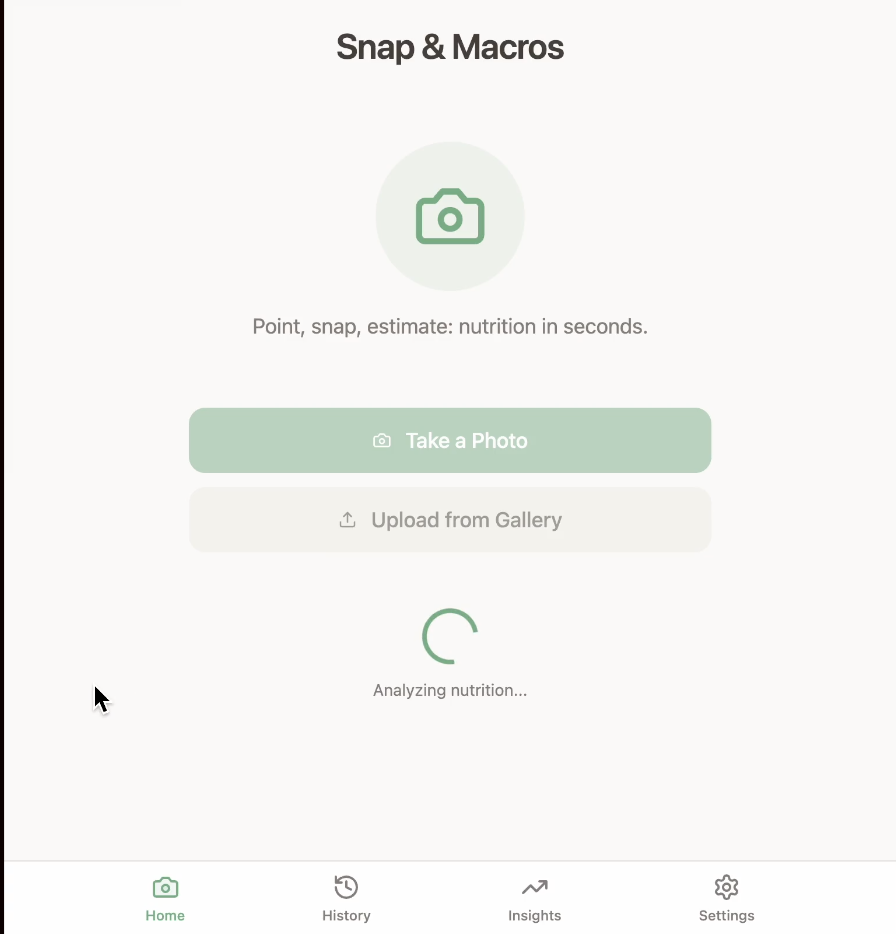
I built a nutrition tracking app that uses AI photo recognition to extract macro nutritional data from images of food. Snap a photo, get your calories, protein, carbs, and fats. The goal was eliminating the manual entry barrier that kills most tracking habits before they form.
Traditional nutrition apps require users to search databases, select portion sizes, and manually enter every item in every meal. For a single lunch, that might mean five separate entries with estimated weights and brand selections. Multiply that by three meals plus snacks, and you're spending significant time on data entry instead of actually eating.
The people who need tracking most—those managing diabetes, recovering from eating disorders, or following strict dietary protocols—are often the same people for whom the cognitive load of manual logging creates the most friction. A simpler input method doesn't just save time; it makes consistent tracking actually sustainable.
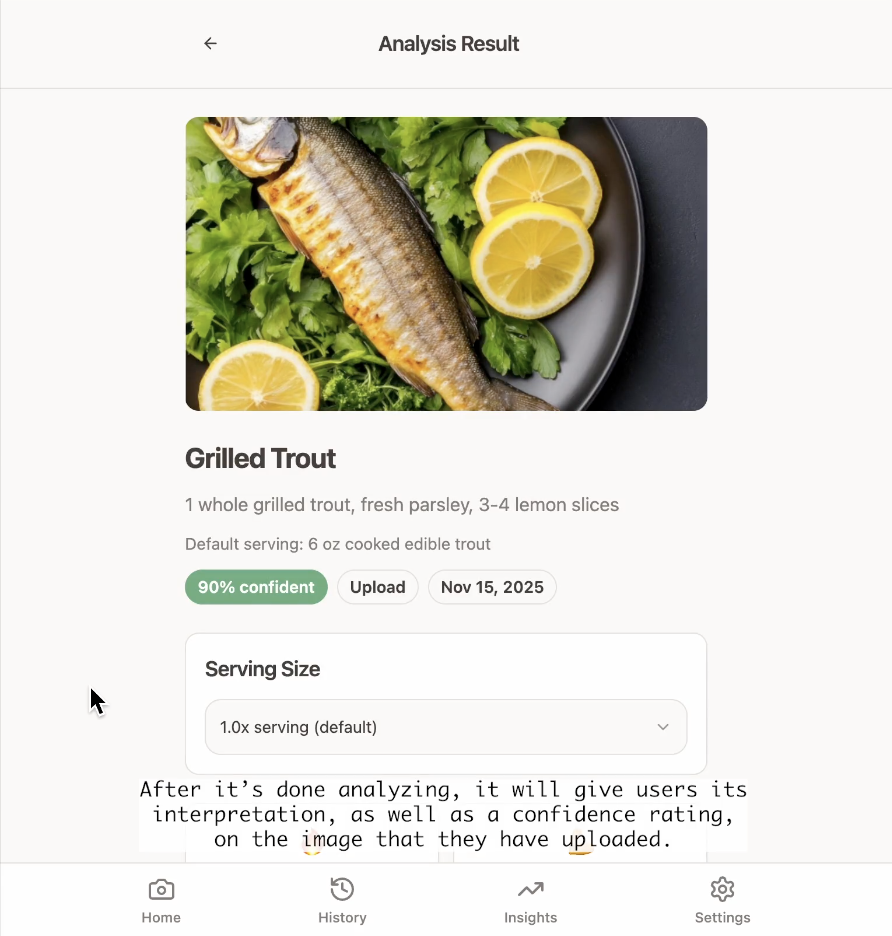
The app reduces food logging to a single action: take a photo. The AI analyzes the image, identifies the food items, estimates portions, and outputs calorie and macro data. Users get immediate feedback without searching databases or guessing serving sizes.
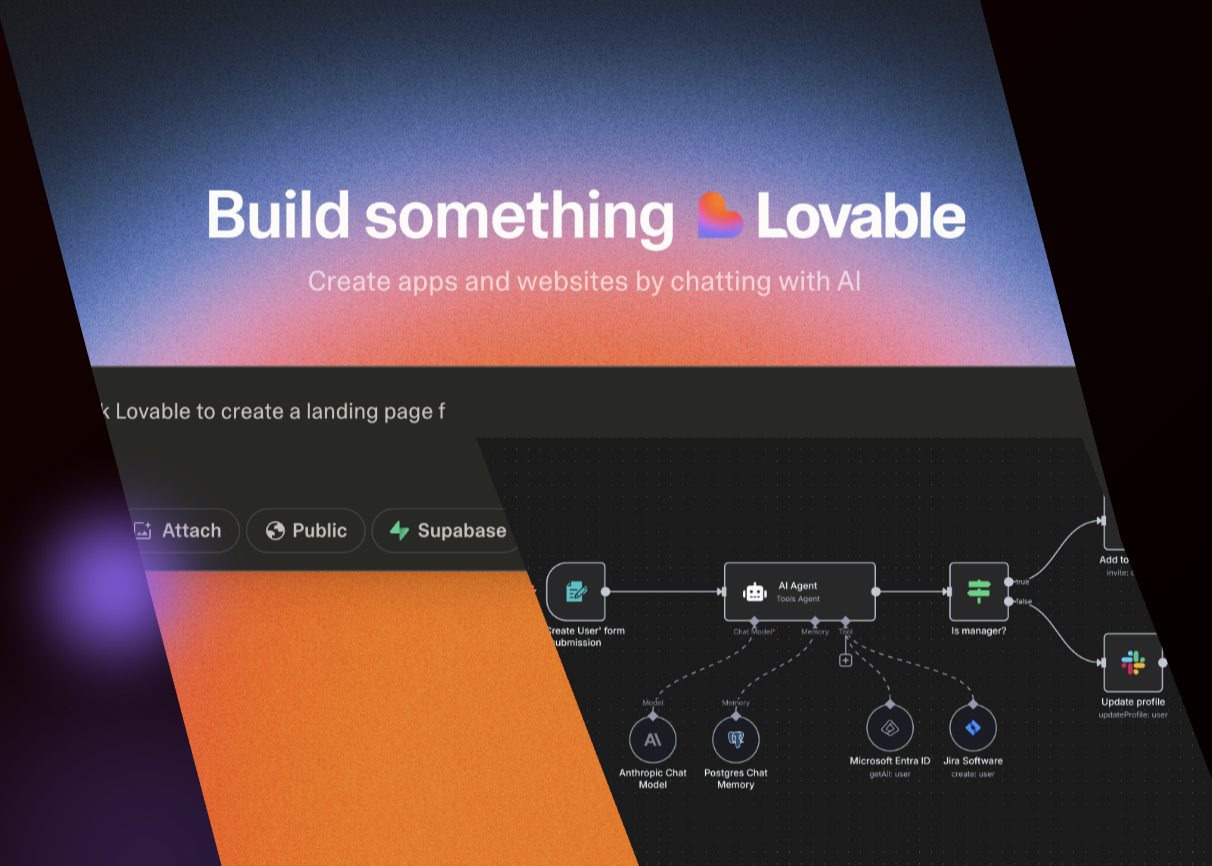
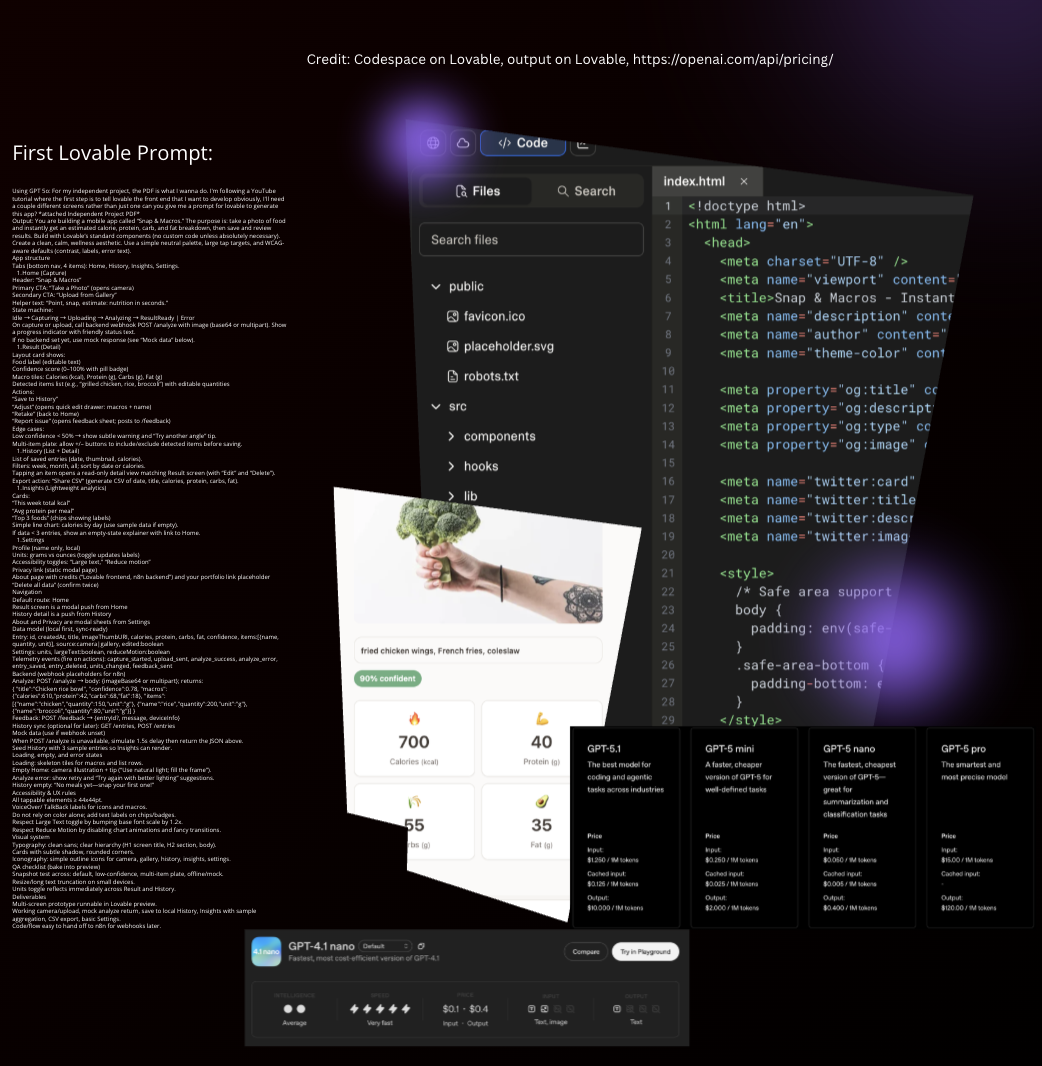
I built the processing pipeline using n8n for automation, connecting the photo input to an LLM for image analysis and nutrition estimation. The interface was designed in Figma and built with Lovable, prioritizing speed and clarity over feature bloat.
The MVP proves the concept works. The next milestone is improving accuracy, which requires upgrading the LLM's capacity and processing power. Better models mean more reliable food identification, more accurate portion estimation, and more precise macro calculations.
With additional funding, I'd also expand the feature set: meal history tracking, daily/weekly summaries, goal setting, and integration with fitness apps. But the core insight remains the same—reduce friction to the absolute minimum, and people will actually track. Everything else is iteration on that foundation.
Accessibility